
Move-in & welcome programs
Curated samples, welcome kits, and resident-life partnerships timed to the start of each semester — the highest-trial moment of the year.
The campus channel, mapped
Five daily moments connect emerging brands to where students live, eat, study, restock, and gather.
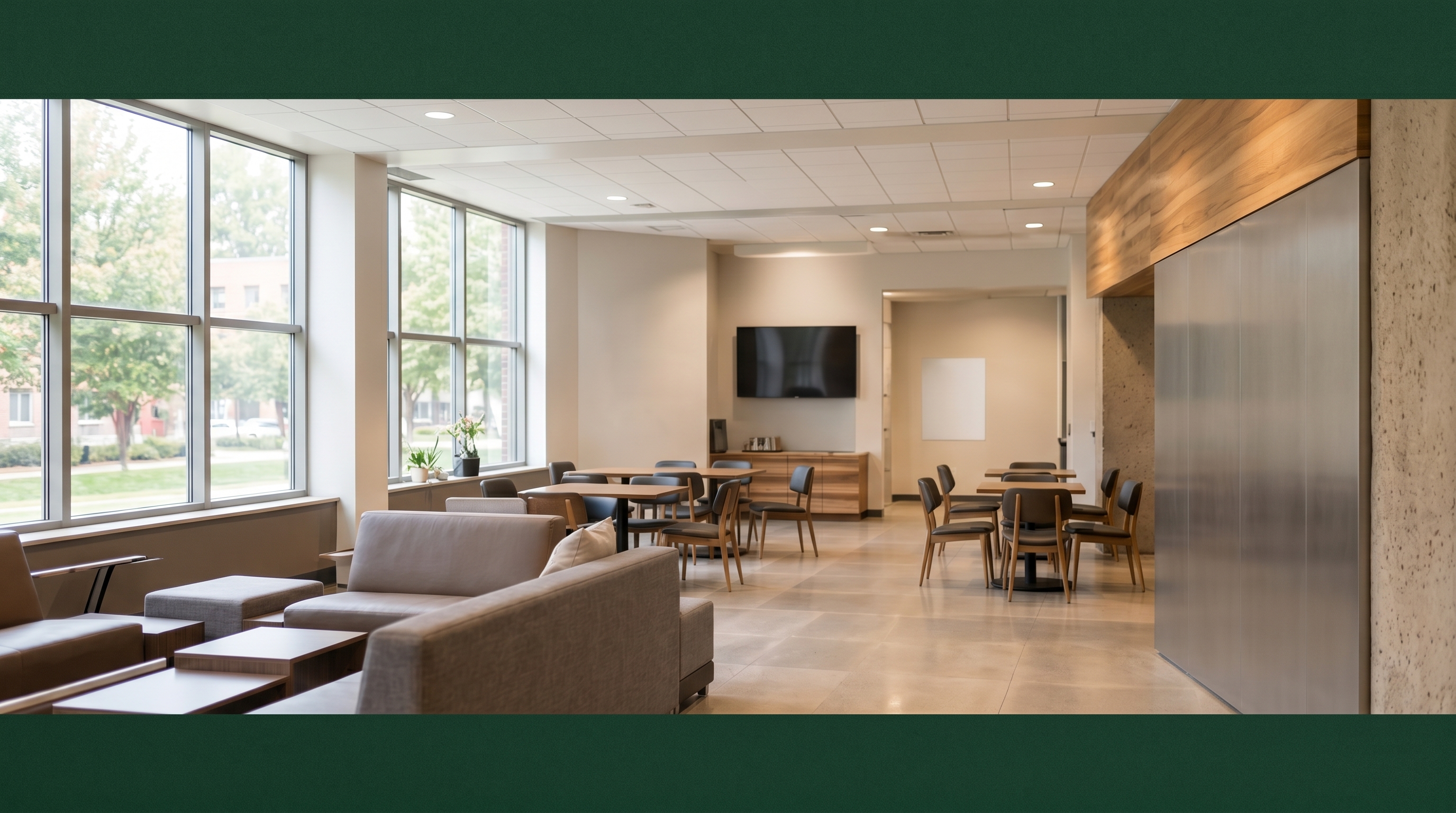

One continuous path through student life
The residence hall channel is not a single placement. It is a sequence of daily moments — moving in, eating, studying, restocking, going out — each with its own native way for a brand to participate.
Curated samples, welcome kits, and resident-life partnerships timed to the start of each semester — the highest-trial moment of the year.
Featured ingredients, branded beverage stations, and limited-run menu collaborations inside campus dining auxiliaries.
Resident-assistant-supported sampling during study events, late-night programming, and floor-community sessions.
Vending placement and small-format retail nodes on residence-hall floors and lobbies — meeting demand at the moment of need.
Programs run with RAs, hall councils, and student-org partners that turn brand presence into student-led recommendation.
We map how brands show up—usefully—in the places students already choose.
Evidence from campuses, not guesswork.
Tactics that fit campus realities.
Show up in the right moment, for the right reason.
The fundamentals
Residence halls are on-campus student housing communities where universities provide living accommodations, dining access, and retail touchpoints — a built-in ecosystem for product sampling, micro-retail, vending, and brand engagement directly within students' daily lives.
On-campus housing communities operated by universities — dorms, suites, and apartment-style buildings that group students together with dining halls, lounges, and ground-floor retail.
One of the most concentrated, high-frequency consumer environments for Gen Z. Students live, eat, study, and socialize in the same square mile, every day, for nine months a year.
Housing offices, campus dining auxiliaries, and student-affairs partners. Access is relational and earned — not bought through media.
Through sampling programs, vending placement, micro-retail in lounges and convenience nodes, dining-hall partnerships, and student-led engagement — never through interruptive advertising.
Residence halls are not a marketing audience to reach — they are a built-in consumer environment to participate in. Brands that show up as part of daily life compound trust faster than any ad placement can.
ResidenceHalls.org · channel field notes
Channel stack
A working program reads the full channel stack — the operating environment, the access partners, the placement formats, and the engagement layer that makes any of it stick.
On-campus residence halls — dorms, suites, dining, lounges, lobbies — where Gen Z lives nine months a year.
Housing offices, campus dining auxiliaries, student-affairs teams, and resident-leader networks who decide what shows up.
Sampling kits, vending, micro-retail, dining-hall features, lounge programming — each with its own approval path and format constraints.
Resident-assistant-led activations, hall-council partnerships, and student-org programs that convert presence into adoption.
Practical process
Start with one useful moment. Prove it. Carry the learning forward.
Define the brand's Gen Z thesis, the touchpoint that fits the product, and the campus archetype most likely to demonstrate fit.
Run a single-campus, single-touchpoint pilot — sampling, dining, vending, or lounge programming — with clean baseline measurement.
Expand the validated touchpoint to a regional set of residence-hall communities matched to the brand's distribution geography.
Track trial rate, reorder velocity, and student-led signal. The residence-hall channel earns its keep on repeat behavior, not impressions.
Bring measured results back to housing, dining, and student-affairs partners ahead of the next semester. Renewal is the channel's proof point.
Channel network
Local-firehouse channel access — another concentrated community environment where brands earn presence through participation, not advertising.
Neighborhood police-substation channel — civic touchpoints with high-trust audiences, structured the way residence-hall partners are.
Sheriff substation channel — county-level civic placements that round out the network's non-traditional retail map.
The parent network — shared guidance for emerging brands building distribution through community-anchored channels.
Brief the channel team
Send the brand thesis, the touchpoint you want to test (sampling, dining, vending, lounge, student-led), the campus archetype, and the semester window. The channel team returns a pilot scope, partner short-list, and measurement plan.
Email the channel teamReview notes
ResidenceHalls.org introduces new opportunities for startup and emerging brands to access the college residence hall channel—one of the most concentrated, high-frequency consumer environments for Gen Z. Definition: Residence halls are on-campus student housing communities where universities provide living accommodations, dining access, and retail touchpoints—creating a built-in ecosystem for product sampling, micro-retail, vending, and brand engagement directly within students’ daily lives.